Chiharu, Thousand Million, Ophelia Trio Review
As a designer with years of experience in branding and visual communication, I’ve come across countless fonts that promise the world. Chiharu, Thousand Million, Ophelia Trio from Script Amp is one that delivers on its aesthetic potential, but it’s not a one-size-fits-all solution. This trio of script fonts offers a unique blend of elegance and character, but their performance in real-world design scenarios requires careful consideration.
The First Impression: Aesthetic Mood and Visual Personality
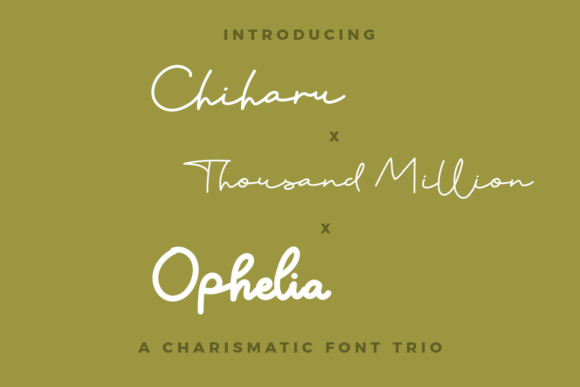
Chiharu, Thousand Million, Ophelia Trio immediately conveys a sense of refinement and softness. The flowing curves and delicate details suggest a connection to artistry, making it ideal for projects that aim to evoke emotion or create a personal touch. Each font has its own nuance—Chiharu leans more toward a classic, hand-drawn feel, while Thousand Million feels slightly more modern and fluid. Ophelia Trio adds a touch of whimsy, perfect for playful branding or creative projects.
These fonts are best suited for designs that require a human, organic feel. They thrive in editorial design, packaging, and digital products where visual storytelling is key. However, they’re not the best choice for high-contrast, minimalist layouts that rely on clean, structured typography.
Real-World Performance: Where It Shines and Where It Falters
In logo design, Chiharu, Thousand Million, Ophelia Trio can be a powerful tool when used sparingly. Their fluidity works well for custom logos that need a personal, artisanal touch. But they may struggle in situations where clarity and scalability are critical. For example, using them as a brand mark or in small text can lead to legibility issues.
Packaging design benefits from the personality these fonts bring. They work well on product labels, especially for niche brands like boutique skincare, handmade goods, or luxury stationery. However, when paired with bold colors or complex graphics, the subtlety of the strokes can get lost. It’s important to test them in different contexts before finalizing a design.
For web design and social media graphics, Chiharu, Thousand Million, Ophelia Trio can add a distinctive flair. They’re great for headers, banners, and decorative elements. But their complexity can reduce readability at smaller sizes, so they should be reserved for display purposes rather than body text.
When used in print, such as in flyers, invitations, or merchandise, these fonts shine when paired with complementary styles. A serif font or a sans serif font can balance their flow and provide contrast that enhances readability without sacrificing style.
Where to Use With Caution
Large headlines can be problematic with Chiharu, Thousand Million, Ophelia Trio. The intricate details may become too dense or unclear, especially in low-resolution prints or on mobile screens. Similarly, short phrases or quotes may not benefit from the font’s complexity, as they can appear cluttered or overdesigned.
Premium packaging or high-end branding may also require a more restrained approach. These fonts can sometimes feel too casual for a luxury brand, unless the overall design language supports that aesthetic. In such cases, pairing them with a more formal typeface can help maintain a balanced look.
Social posts and supporting text are other areas to be cautious. While they can add visual interest, they shouldn’t dominate the composition. Using them as accents rather than primary text ensures they enhance rather than distract.
Readability, Hierarchy, and Brand Consistency
One of the biggest challenges with Chiharu, Thousand Million, Ophelia Trio is maintaining readability. Their ornate features can make it difficult to distinguish certain letters, especially in lowercase forms. This makes them unsuitable for long-form content or any design that relies on clear, easy-to-read text.
However, when used correctly, they can reinforce brand consistency. Their unique character helps establish a strong visual identity, especially for brands targeting creative, artistic, or lifestyle audiences. They contribute to a cohesive look when paired with other design elements that reflect the same mood and tone.
Audience trust and professionalism depend heavily on how a font is used. While Chiharu, Thousand Million, Ophelia Trio can add a touch of sophistication, overuse or misuse can make a design feel unpolished. It’s essential to test them in real mockups and consider how they’ll perform across different mediums.
Practical Designer Notes
Before committing to Chiharu, Thousand Million, Ophelia Trio, test it in black and white. This helps assess how the strokes and spacing hold up without color distractions. Also, check small-size readability—especially if it will be used in product labels or website footers.
Try it on real mockups to see how it interacts with other design elements. Compare uppercase and lowercase forms to ensure they complement each other. Review spacing and kerning to avoid awkward gaps or tight clusters that could affect legibility.
Pairing it with other font types can help achieve balance. A serif font might provide structure, while a sans serif font can offer contrast. A handwritten font or a display font can add variety without overwhelming the design.
Finally, always confirm commercial licensing before using these fonts in client projects or business assets. Make sure the license covers all intended uses, including digital products, printable design, and Canva templates.
Final Thoughts: When to Use and When Not To
Chiharu, Thousand Million, Ophelia Trio is a premium font that excels in specific design contexts. It’s ideal for creative projects, editorial design, and branding that values personality and visual storytelling. But it’s not a replacement for clean, functional typography in every situation.
As a designer, I recommend using these fonts as a focal point rather than a default choice. They have the power to elevate a design, but only when used thoughtfully and in harmony with the rest of the visual language. Whether you’re working on a digital product, a brand identity, or a print campaign, Chiharu, Thousand Million, Ophelia Trio deserves a place in your toolkit—but not everywhere.